I listen to music in several places around my home, as well as in the car, but my main listening system is where I spend time evaluating recordings more critically.
Over the years, my collection has evolved from CDs and iTunes to a networked digital library built around lossless audio files and Roon. I no longer collect vinyl, preferring the convenience and consistency of digital playback.
The equipment, software, and digital library behind my listening.
Music is part of my daily life, whether I’m listening through headphones at my desk, enjoying something in the kitchen, or settling into my main listening room with a new recording.
Over the years, I’ve assembled several audio systems around the house. Some are designed for convenience and casual listening, while others are better suited to the kind of concentrated listening I do when evaluating recordings for biberfan.
I’m interested in good sound, but I’m also interested in the music itself. Audio equipment is a means to an end: getting closer to the performance, understanding the choices made by musicians and recording engineers, and enjoying the results.
From CDs to a Digital Library
My current approach to listening began with a collection of compact discs, many of which I eventually ripped into iTunes. Like many early adopters of digital music, I moved from listening to CDs directly to managing files on a computer, then carrying music around on an iPod.
That process has changed considerably over the years.
Today, I maintain digital copies of my CD collection in Apple Lossless format (ALAC), stored on a Synology network-attached storage server. The server also holds personal files and is backed up to the cloud.
I use Roon to manage and play the collection. A dedicated Roon ROCK server connects to my home network via Ethernet, allowing me to access the library from several listening locations around the house.
Roon has become central to how I explore my collection, particularly when comparing recordings of the same work or following connections among composers, performers, and ensembles.
I no longer collect vinyl records. My interest is in digital reproduction, both for its convenience and for the ability to maintain a large, accessible collection of recordings.
The Main Listening Room
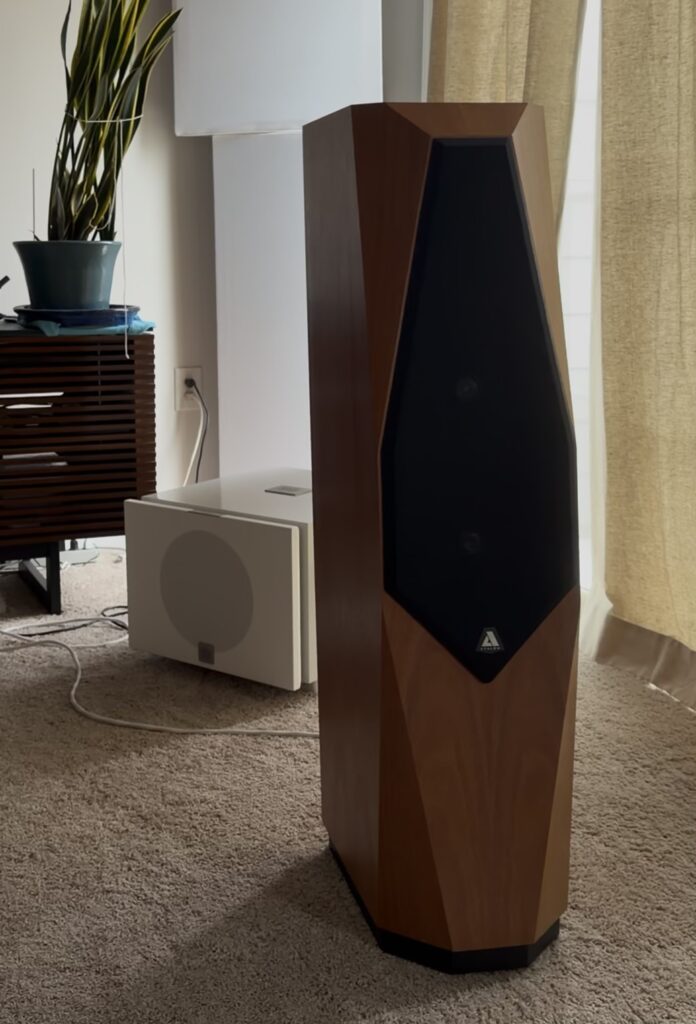
My primary listening system is where I spend the most time evaluating recordings. It currently consists of:
Digital source and streaming
- Grimm Audio MU2
Amplification
- Classé stereo amplifier (Class A/B)
Loudspeakers
- Avalon Acoustics
This is the system I generally turn to when I want to listen closely to a recording, particularly when evaluating the relationship between musical performance, acoustic environment, and recording quality.
The quality of a recording matters to me, but I’m not interested in treating audio equipment as a substitute for musical engagement. A technically impressive recording of an uninspired performance remains an uninspired performance.
Conversely, a remarkable interpretation can be compelling even when the recording itself falls short of modern technical standards.
My reviews attempt to acknowledge both realities.
The Home Office
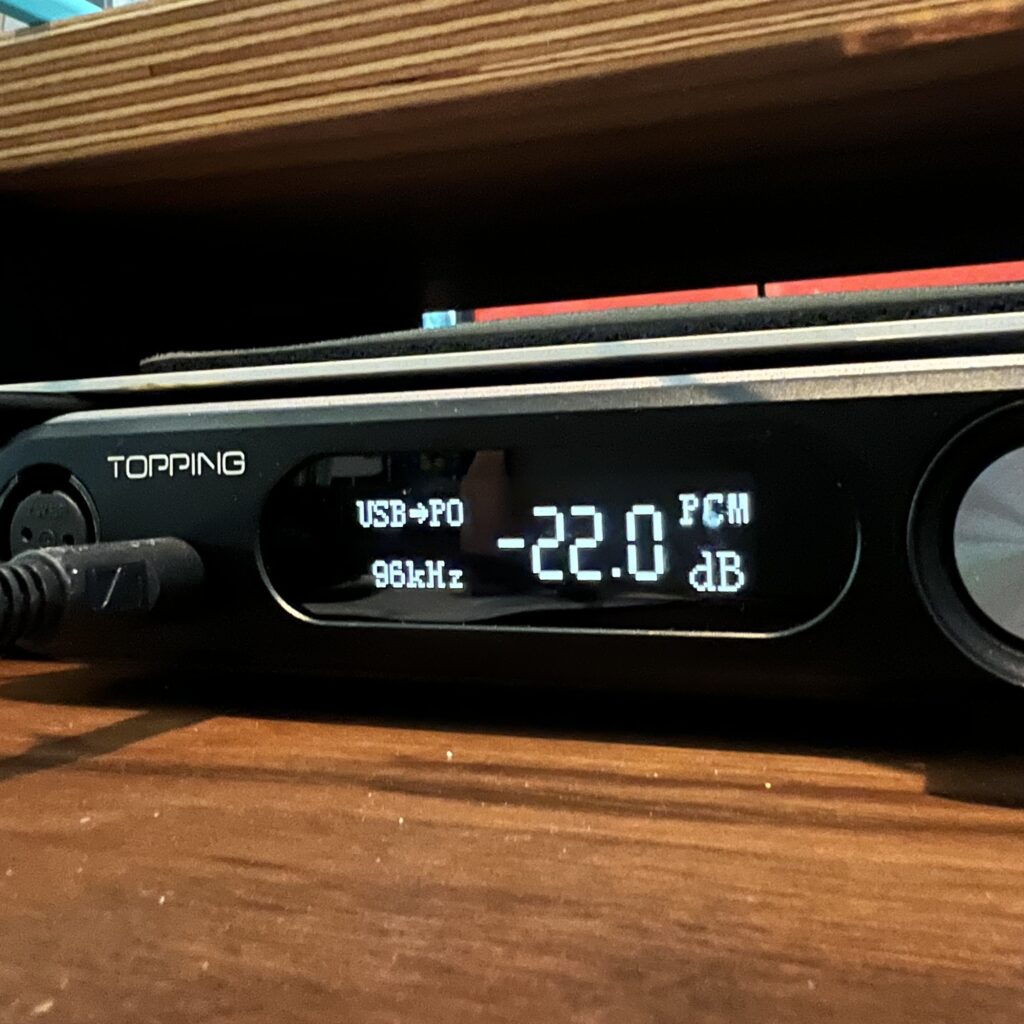
My office offers two different ways to listen: a desktop headphone system and a traditional stereo speaker arrangement.
Desktop Headphone Listening
For listening directly from my MacBook Pro, I use a Topping DX5 connected via USB.
Headphones are particularly useful when I want to concentrate on details without disturbing anyone else in the house. They’re also convenient for comparing recordings while working at the computer.
Office Stereo
My office speakers have a longer history.
As a college graduation gift, my parents gave me a Rotel integrated amplifier and a pair of Bowers & Wilkins 600-series bookshelf speakers. The Rotel eventually stopped working, but the B&W 602 speakers are still going strong.
The current arrangement includes:
- Bowers & Wilkins 602 loudspeakers
- NAD integrated amplifier
- Auralic streamer
- Bel Canto DAC 3
The Auralic connects to my network via Ethernet. I also use an optical Toslink connection from an older Apple TV, allowing me to stream audio from my computer to the speaker system.
There’s something satisfying about continuing to use speakers that have been part of my musical life for so long.
Music Throughout the House
Not every listening session requires a dedicated stereo system.
Our home came with built-in speakers serving the dining room and kitchen, powered by a Sonos amplifier. Because the amplifier is compatible with Roon, it’s easy to play music from the same digital library in those spaces.
This arrangement is less about critical listening and more about making music part of everyday life.
I also listen regularly in the car, where I have plenty of opportunities to revisit familiar recordings or become acquainted with new ones.
Headphones
Headphones serve several purposes in my listening routine. They’re convenient for work, travel, and situations where using loudspeakers isn’t practical.
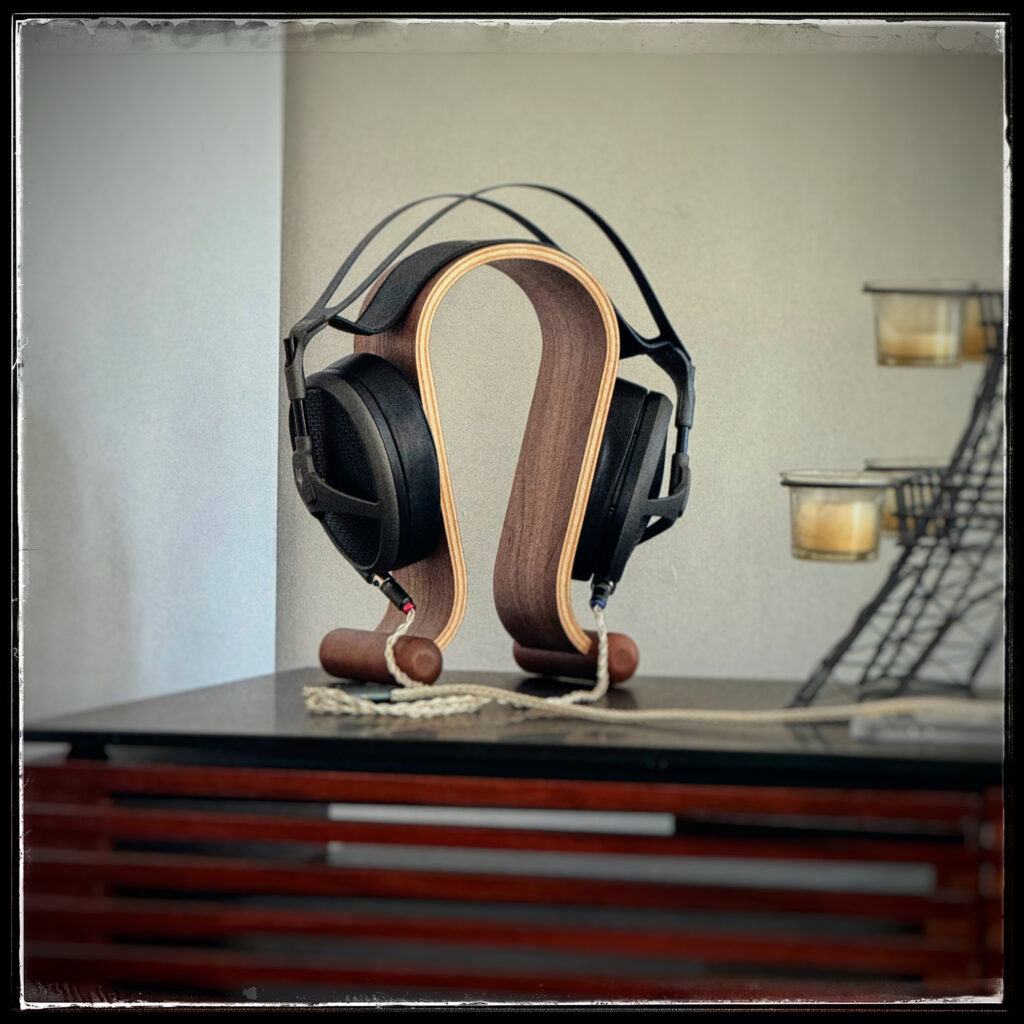
My current collection includes:
- Apple AirPods Max
- Apple AirPods Pro 2
- Sennheiser HD 580
- Sennheiser HD 650
- Meze Elite
Different headphones offer different listening experiences, and I don’t necessarily use them interchangeably.
For serious listening, I appreciate having several options available, particularly when evaluating recordings that differ significantly in their engineering or acoustic presentation.
My Music Collection
I’ve been collecting recordings for decades, with particular attention to baroque and classical repertoire.
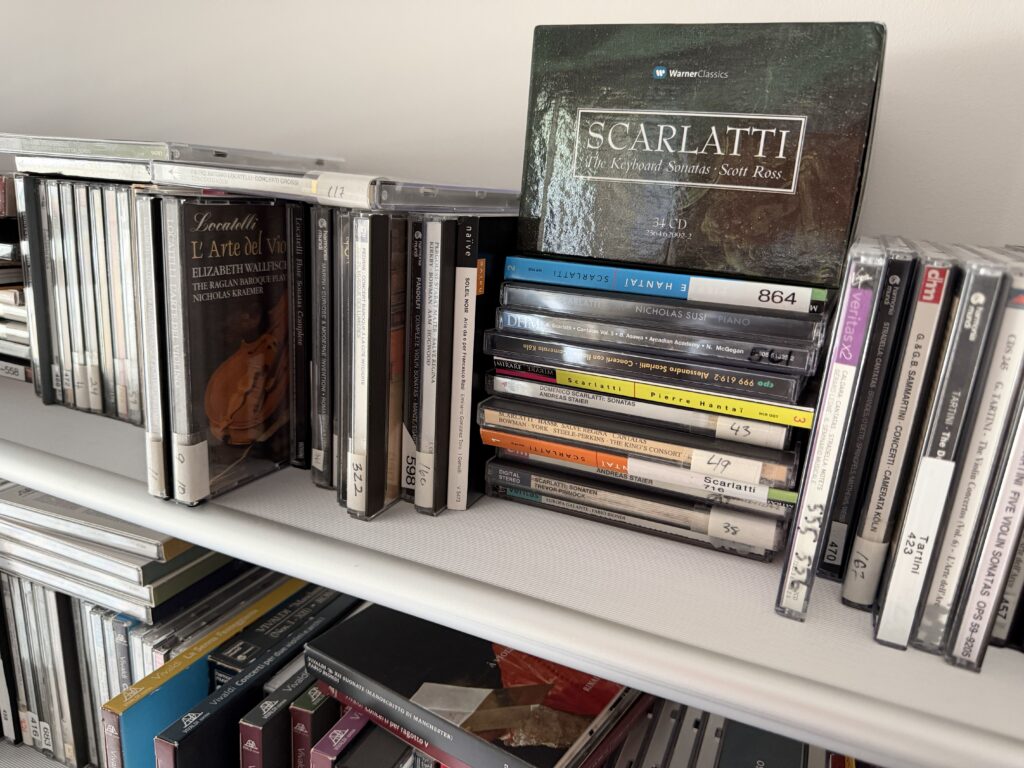
One of the pleasures of maintaining a digital collection is the ability to compare multiple performances of the same work. The differences can be fascinating: instrumentation, tempos, ornamentation, ensemble size, recording venue, and the interpretive decisions made by conductors and performers.
Sometimes a new recording reveals something unexpected about a work I’ve known for years. Other times, returning to an older favorite reminds me why I was drawn to it in the first place.
I’ve made an index of my published reviews available, along with a spreadsheet documenting my music collection.
[Browse all recording reviews →]
[Download my music collection (Excel) →]
Collection spreadsheet last updated: Late 2024.
A Note About Equipment and Reviews
I don’t believe there’s a single perfect way to listen to recorded music.
A recording can sound quite different through headphones, bookshelf speakers, or a dedicated high-fidelity system. The room itself also influences what we hear, sometimes as much as the equipment.
When I write about sound quality, I’m describing what I hear through the systems available to me. Those observations are inevitably influenced by the equipment, listening environment, and my own preferences.
I try to distinguish technical observations about a recording from my reactions to the musical performance. Both matter, but they’re not the same thing.
Ultimately, the purpose of all this equipment is simple: to enjoy music and, occasionally, to understand it a little better.
Equipment information last updated: October 2026.